
IV "Drip" & Detox
Written by Dr. Lori Martin, M.D., Medical Director, THRIVE 4 Peak Performance. Dr. Martin specializes in performance medicine, longevity medicine, and integrative recovery modalities.
Related reading: IV "Drip" in Alpharetta | NAD+ IV "Drip" | NAD+ IV and Longevity
If there is a single molecule that quietly determines how well your body handles stress, toxins, inflammation, and aging, glutathione is a strong candidate. Often called the "master antioxidant," glutathione is produced in every cell of the body and is central to detoxification, immune function, mitochondrial protection, and even the appearance of your skin. The problem is that levels decline with age, with chronic stress, and with environmental exposures — and oral supplementation is notoriously poor at restoring them.
That is where intravenous (IV) glutathione comes in. At THRIVE 4 Peak Performance in Alpharetta, glutathione is one of the most-requested add-ons to our IV "Drip" menu, both as a standalone "push" and as part of a fuller hydration and recovery drip. Here's a complete physician's guide to what glutathione actually does, who benefits most, and what to realistically expect from service.
Glutathione is a small protein (a tripeptide) made up of three amino acids: cysteine, glutamine, and glycine. Every cell synthesizes it, but the highest concentrations are found in the liver, where it does the heavy lifting on phase II detoxification — the enzymatic process that escorts heavy metals, pesticides, alcohol metabolites, and pharmaceutical byproducts out of the body.
Beyond detox, glutathione is your most abundant intracellular antioxidant. It neutralizes reactive oxygen species (ROS) before they damage DNA, proteins, and lipid membranes — essentially acting as the cell's first line of defense against oxidative stress. It also recycles other antioxidants like vitamin C and vitamin E, restoring them to their active forms so they can keep working. In other words, when glutathione is depleted, your entire antioxidant network functions less efficiently.
Levels naturally decline with age, but they can also drop sharply with chronic illness, intensive training, alcohol use, environmental toxin exposure, certain medications, and prolonged psychological stress. Many of the symptoms clients describe as "I just don't recover the way I used to" map directly onto suboptimal glutathione status.
This is the most important question, and the one that most often surprises clients. Oral glutathione is largely broken down in the digestive tract before it ever reaches the bloodstream. Studies have consistently shown that swallowing glutathione capsules produces only modest, inconsistent changes in tissue levels. Intramuscular injections perform better but are still rate-limited by absorption.
Intravenous administration bypasses these losses entirely. The full dose enters the bloodstream at near-100% bioavailability, which means cells throughout the body are bathed in glutathione within minutes of administration. For a molecule whose effects depend on intracellular concentration, that delivery method is not a small detail — it is the entire mechanism. We covered the broader bioavailability argument in our piece on why IV "Drip" works better than oral supplements, and glutathione is one of the clearest examples of that principle.
Glutathione is the central cofactor in phase II hepatic detoxification. Clients with high environmental exposures, post-illness recovery, or heavy alcohol histories often report meaningful improvement in energy and clarity after a glutathione protocol.
By neutralizing oxidative damage and inhibiting tyrosinase activity, glutathione is associated with more even pigmentation, reduced dullness, and an overall "lit-from-within" skin quality. Effects build with consistent dosing rather than appearing after a single session.
Lymphocytes — your body's T-cells and B-cells — depend on glutathione to function properly. Restoring intracellular levels can support immune surveillance, particularly during high-stress periods, post-viral recovery, or for clients with chronic inflammatory conditions.
Mitochondria are exquisitely sensitive to oxidative stress, and damaged mitochondria mean less ATP and slower recovery. Glutathione protects mitochondrial membranes and supports the energy production capacity that drives both physical performance and cognitive endurance.
Hard training generates large amounts of reactive oxygen species. Athletes using glutathione alongside hydration drips often report shorter recovery windows between intense sessions and reduced perceived soreness — useful in any heavy training block.
The brain consumes a disproportionate share of the body's oxygen, which makes neurons highly vulnerable to oxidative stress. Clients frequently describe a sense of mental sharpness and reduced "brain fog" after a series of glutathione sessions.
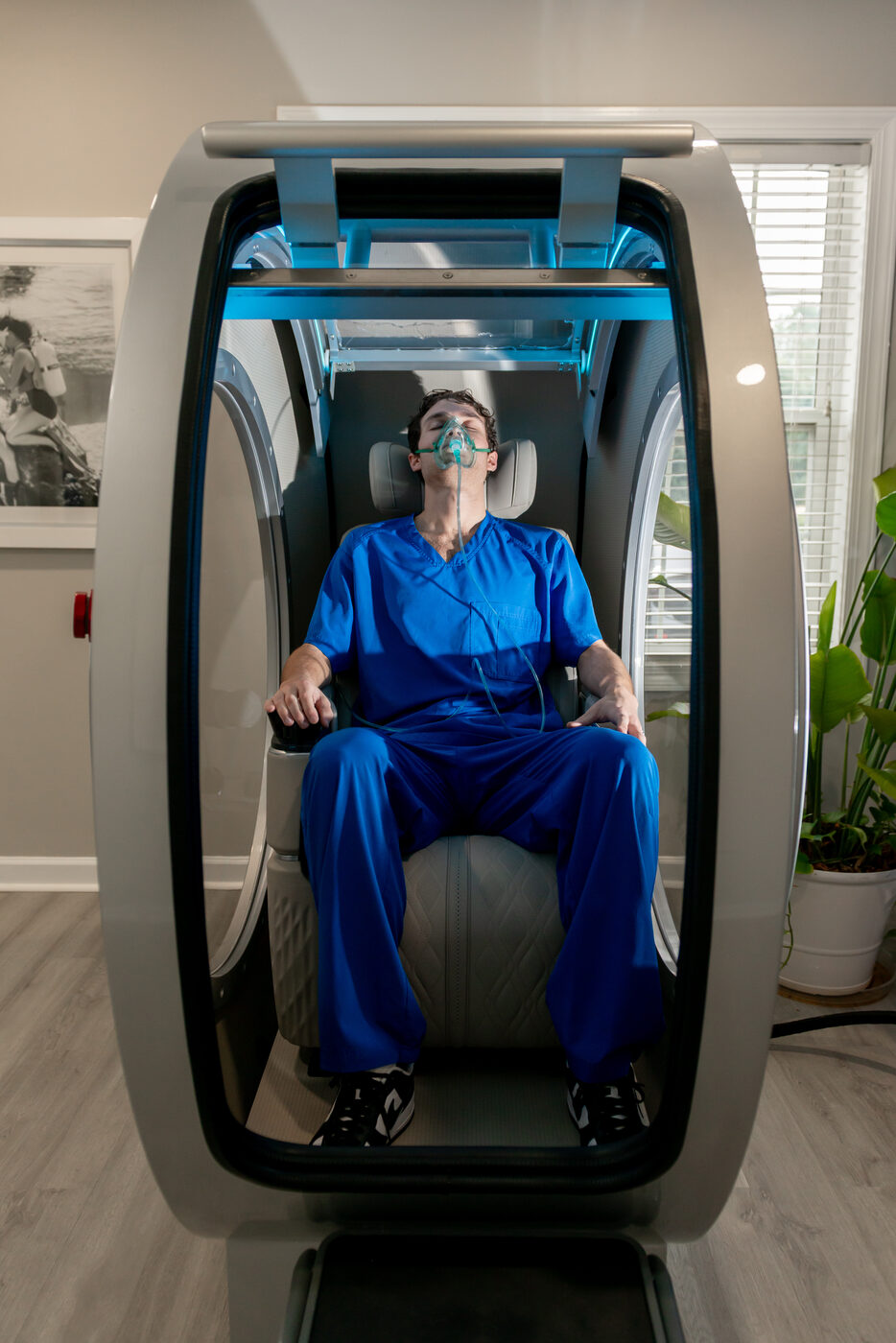
Glutathione IV "Drip" is one of the more broadly tolerated infusions we offer, but the clients who tend to see the largest, most reproducible benefit fall into a few clear groups.
This includes clients in occupations with chemical exposure, those recovering from illness or long-term medication use, and anyone with a history of heavy alcohol consumption. The detox demand on the liver is substantial, and supporting it with the cofactor that does the work is a reasonable, evidence-aligned step.
If your skincare goals are about overall radiance, even tone, and slowing visible photoaging, glutathione works synergistically with vitamin C to address the oxidative side of skin aging from within. It is not a replacement for sunscreen or topical care — it is a complementary internal lever.
Intensive training generates oxidative stress in proportion to volume and intensity. For athletes already using a layered recovery stack (cryotherapy, red light, compression), glutathione fits cleanly as the intracellular antioxidant component that the other modalities don't directly address.
Conditions like fibromyalgia, autoimmune disorders, and post-viral syndromes are characterized in part by elevated oxidative stress and depleted glutathione status. While glutathione is not a service for any specific disease, supporting baseline antioxidant capacity can be a meaningful piece of a broader plan.
Glutathione is administered either as a slow IV push (5–15 minutes) or added to a larger hydration drip (30–45 minutes), depending on the protocol. Most clients describe the experience as completely uneventful — there is no significant sensation during administration, though some report a faint sulfur taste or warmth in the chest, both of which are benign and resolve within minutes.
For first-time clients, our clinical team reviews health history, current medications, and any contraindications before service. Glutathione is generally well-tolerated, but it is not appropriate during active chemotherapy without oncologist coordination and is used with caution in clients with sulfa allergies. The full intake conversation is part of the model that defines every drip we deliver.
For meaningful, sustained benefit — particularly for skin, immune, or detox goals — most clients do best with a series of 4–8 sessions over 4–8 weeks, followed by maintenance every 2–4 weeks. One-off sessions can be useful for acute recovery, travel, or pre-event prep, but the compounding benefits show up with consistency.
Book an IV "Drip" session at THRIVE 4 Peak Performance in Alpharetta and our clinical team will help you build a protocol that fits your goals — detox, skin, immune, or recovery. Same-day appointments are usually available.
Book a SessionFor the vast majority of clients, yes. Glutathione has an excellent safety record when administered by trained clinical certified THRIVE TECHS, with minor and uncommon side effects (transient lightheadedness, mild flushing). It should be avoided or specifically discussed with your physician during active chemotherapy, in pregnancy, and in clients with significant sulfa allergies. Our intake process screens for these factors.
Energy and clarity benefits often appear within 24–48 hours of the first session. Skin and pigmentation changes typically build over 4–6 sessions. Detox and immune-related goals are best evaluated after a full series of 4–8 infusions, since glutathione is most effective when intracellular levels are kept consistently elevated rather than spiked once.
Yes — and this is one of the most popular configurations at THRIVE. Glutathione pairs naturally with vitamin C, B-complex, and NAD+ infusions, since the antioxidant and mitochondrial support pathways are complementary rather than redundant. Our team will recommend the right combination based on your goals.
Pricing varies by dose and whether glutathione is added to a base drip or run as a standalone push. Our front desk team can walk you through current packages and any membership options when you call (470) 359-6195 or book online.
THRIVE 4 Peak Performance is located at 3568 Old Milton Pkwy, Alpharetta, GA 30005. We serve Alpharetta, Milton, Roswell, Johns Creek, and the surrounding North Atlanta metro. Call (470) 359-6195 to schedule or ask about current packages.